
IN the vicinity of iron
2025, steel chair and table, sea glass pawns with metal traces, Paolina Kühr & Luka Perkins-Petit. Open Studios, Jan Van Eyck Academie, Maastricht, NL.
this installation introduces a developing strand of orsa studio: remediating heavy metal pollution with algae-based glass. The installation concept was co-devised with invited artist Luka Perkins-Petit (2000, France).
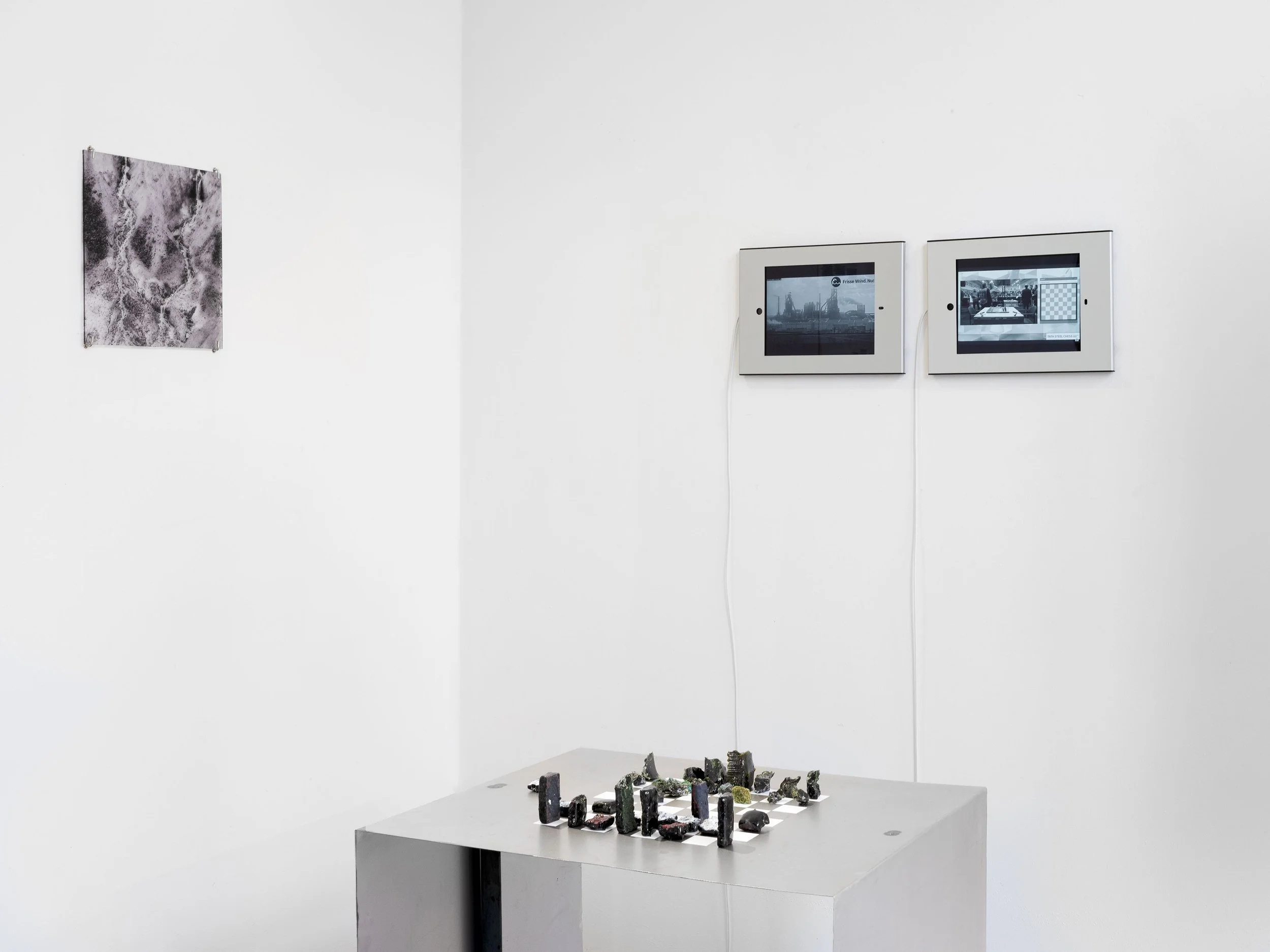
The first is a many-houred archive of the prestigious chess championship organised and sponsored by this steel company. The other is a 24/7 stream of Tata’s sprawling industrial plant at Wijk aan Zee. Run by activists, the feeds are algorithmically monitored to spot clouds coming from the industrial plant for ongoing lawsuits.
There are two main results when you search for ‘Tata Steel Livestream’ on YouTube.
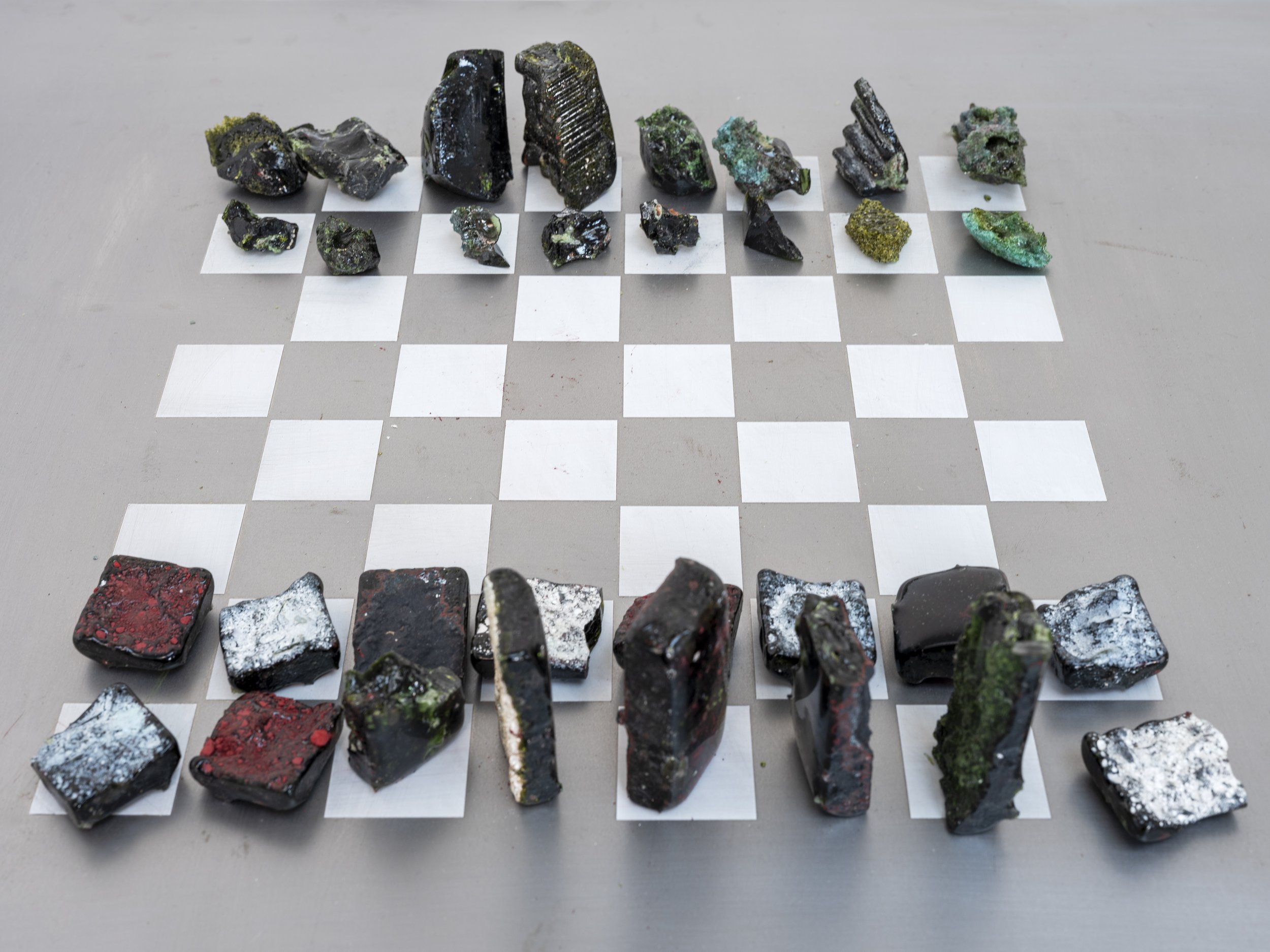
While both broadcasts originate from the same seaside town, they invite radically different forms of spectatorship—between citizen surveillance and entertainment.
The Dutch steel company is the country's largest heavy metal polluter, releasing lead, cadmium, and nickel as byproducts of production. Grounded in this local reality, the chessboard becomes an interface for embodied ecological tension. Each pawn, cast from microalgae glass, contains traces of metal. Whereas conventional glassmaking deliberately adds metal oxides to alter color and properties, this process is reversed: microalgae naturally accumulate heavy metals from polluted waters. Once vitrified, these invisible contaminants become trapped within the glass, revealing their presence through colors shaped by their history of exposure.
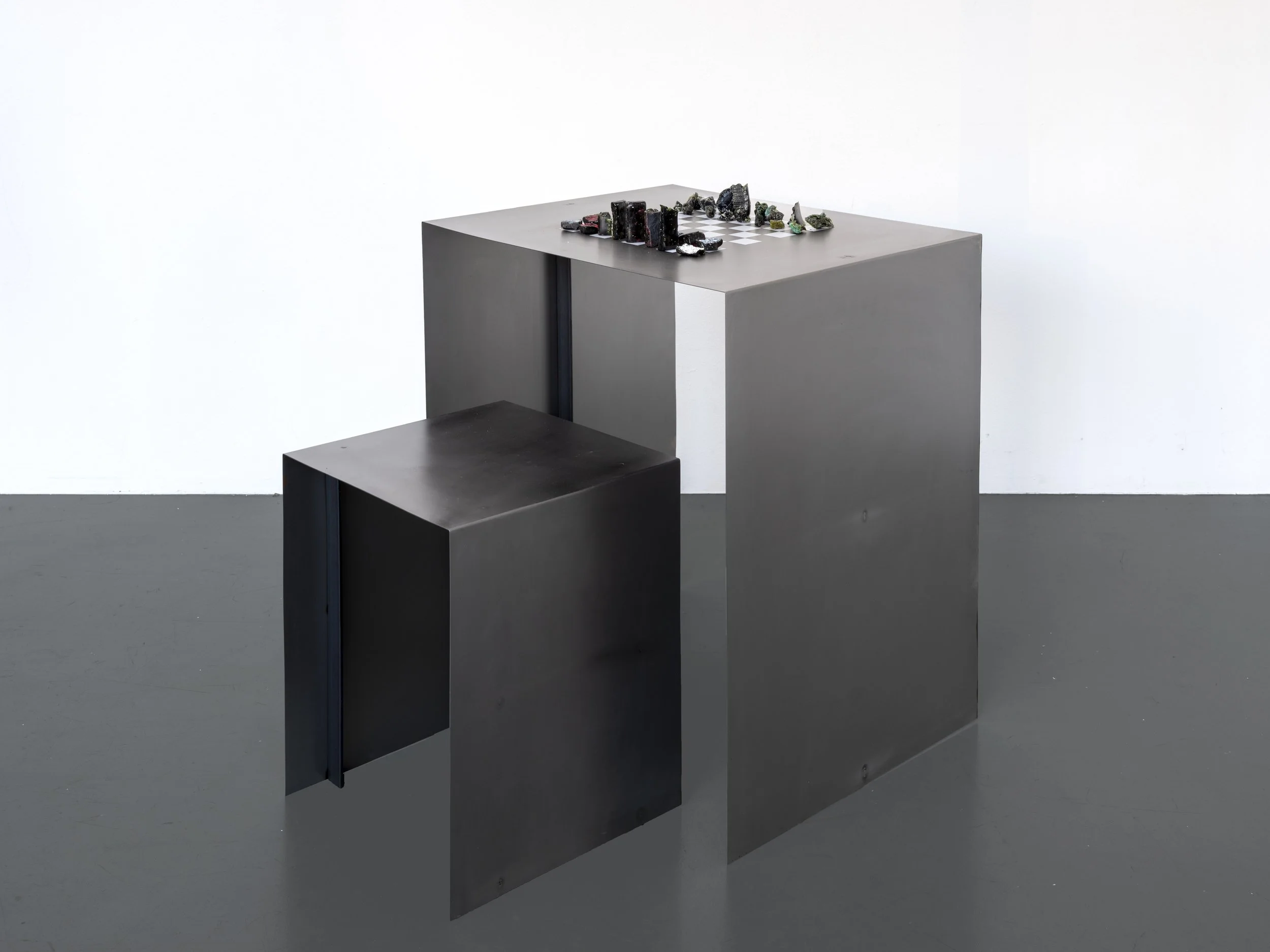
Microalgae absorb CO₂ and bind heavy metals, revealing nature's remarkable capacity for remediation. Yet relying on biological resilience alone risks letting living systems silently absorb what we refuse to confront. The result is a landscape of “negative commons”—contaminated waters, polluted soils, and industrial legacies. Like the metals sealed within the glass, these histories cannot be erased, only made visible, acknowledged, and played differently.