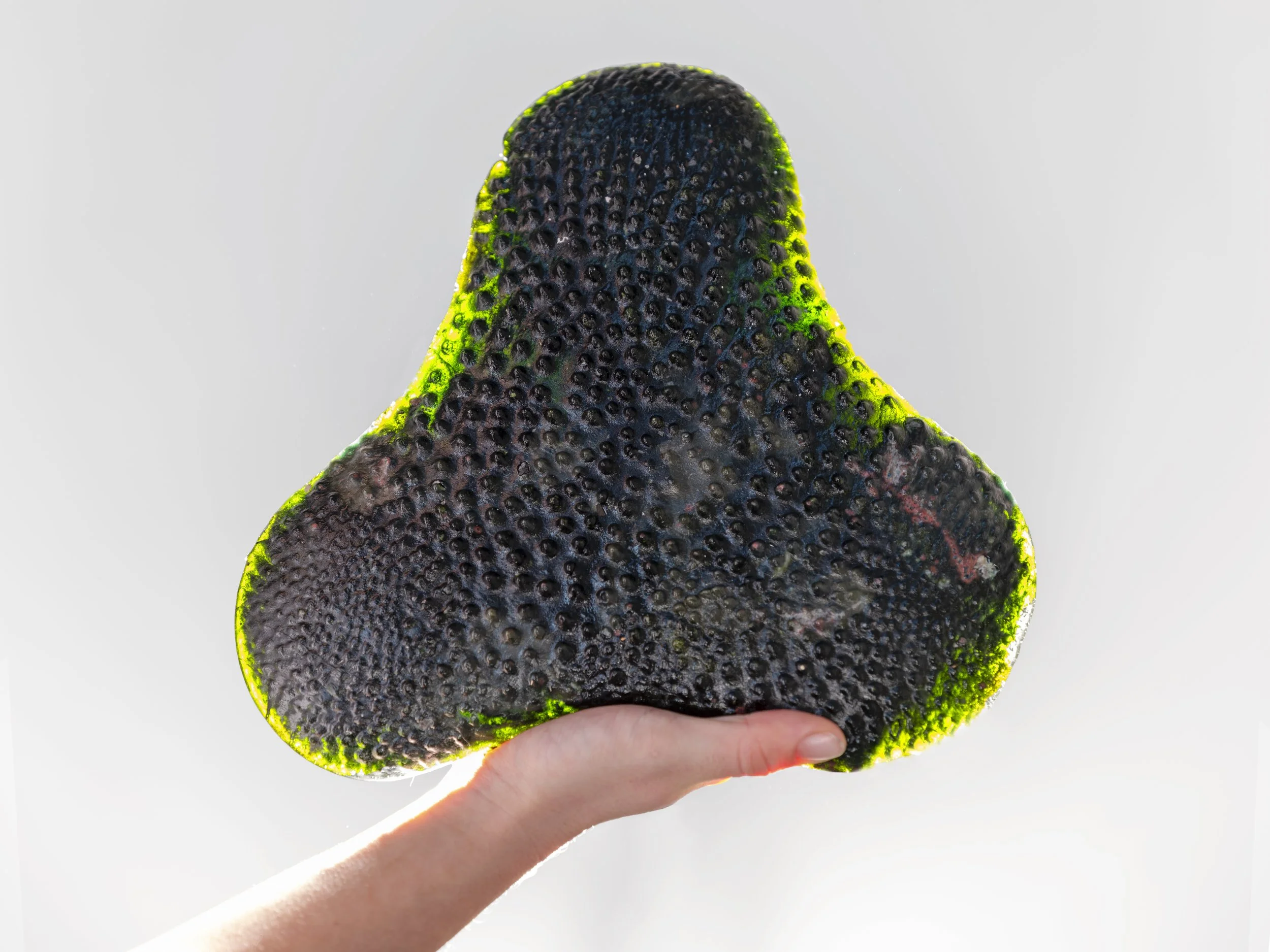
GLASS morphologies
2025, Sea glass casted at MAKE Eindhoven, steel structures showcased at Open Studios, Jan van Eyck Academie, Maastricht NL
Developed during a residency at the Jan van Eyck Academie with the support of the future materials bank, this project was realized in collaboration with CHILL Laboratory at Brightlands Chemelot Campus.
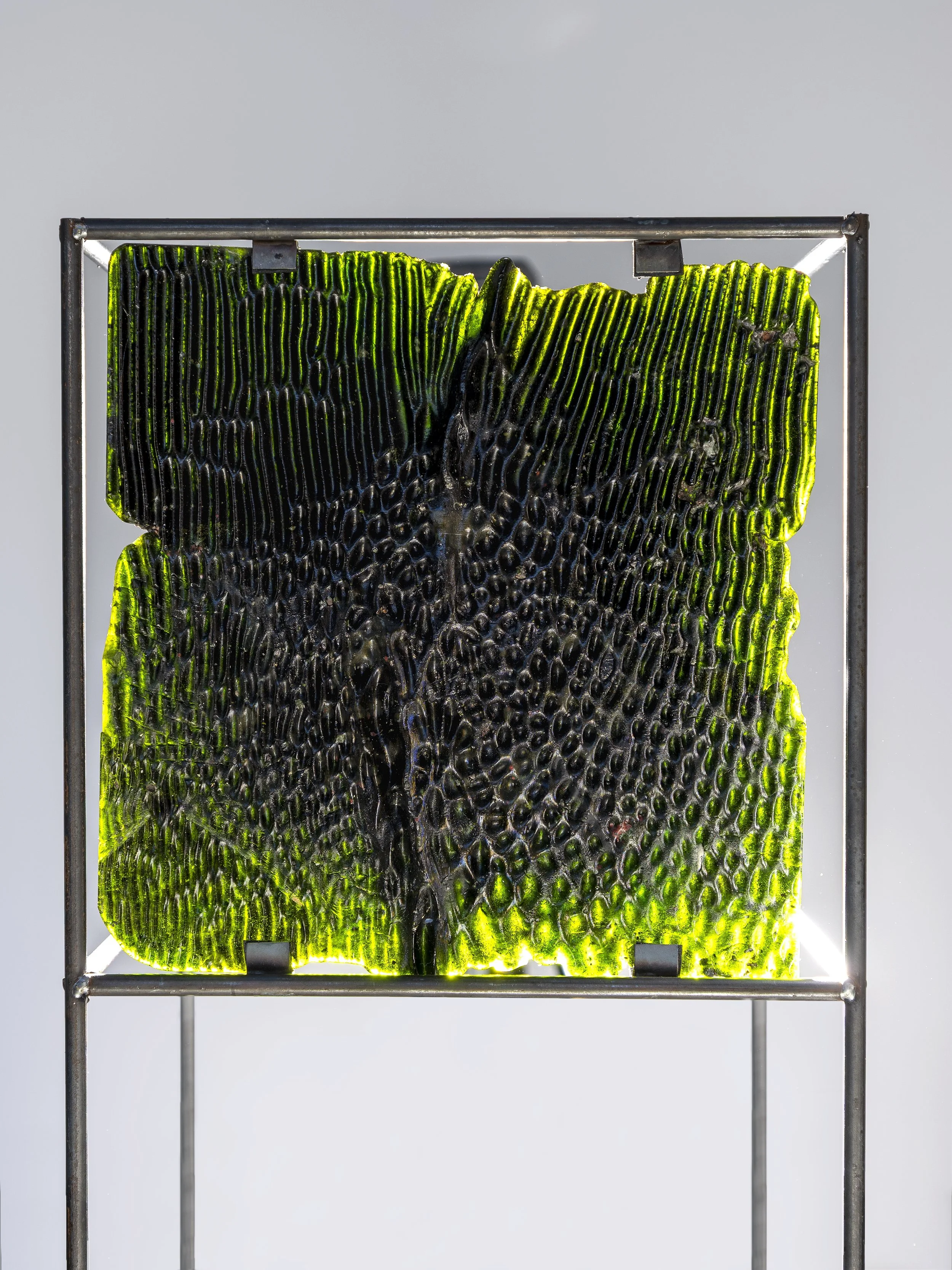
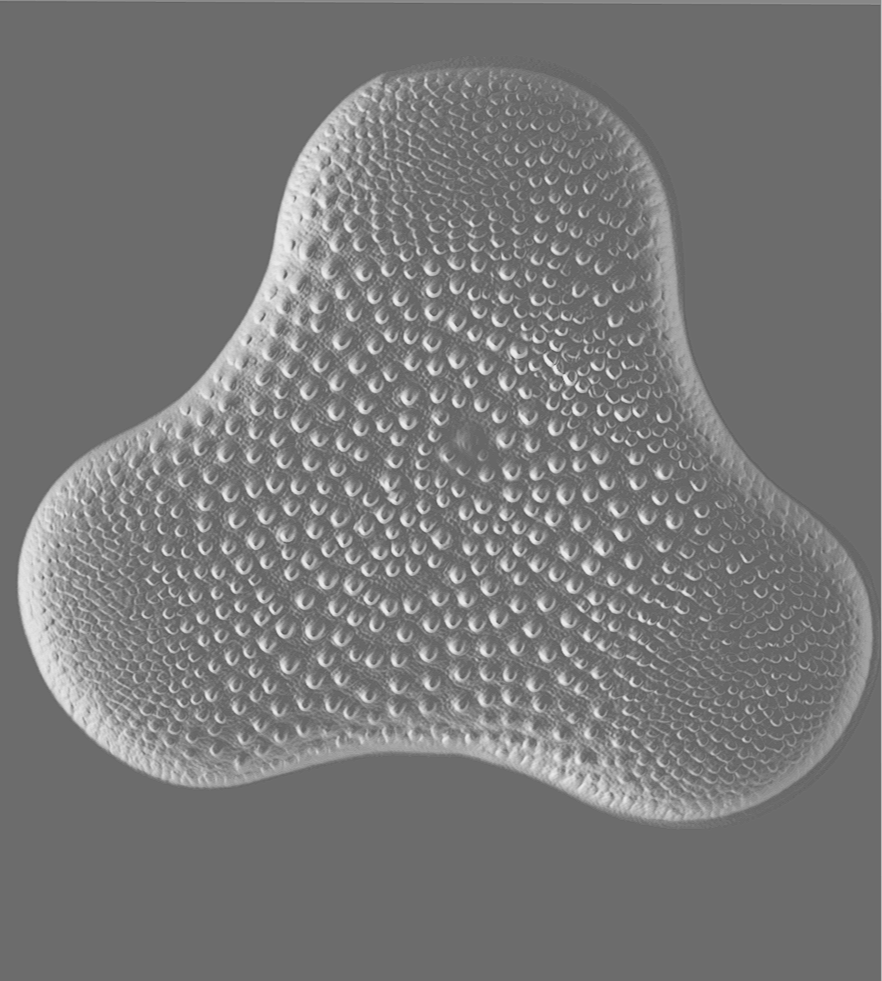
The silica shell of microalgae reveals a remarkable natural architecture. Perforated with nanopores at the scale of visible light, it slows, filters, and redirects light to support photosynthesis while producing subtle iridescent colors through structural interference. Inspired by this principle, the work reimagines glass not as a perfectly clear surface, but as a textured material that reveals its own formation.
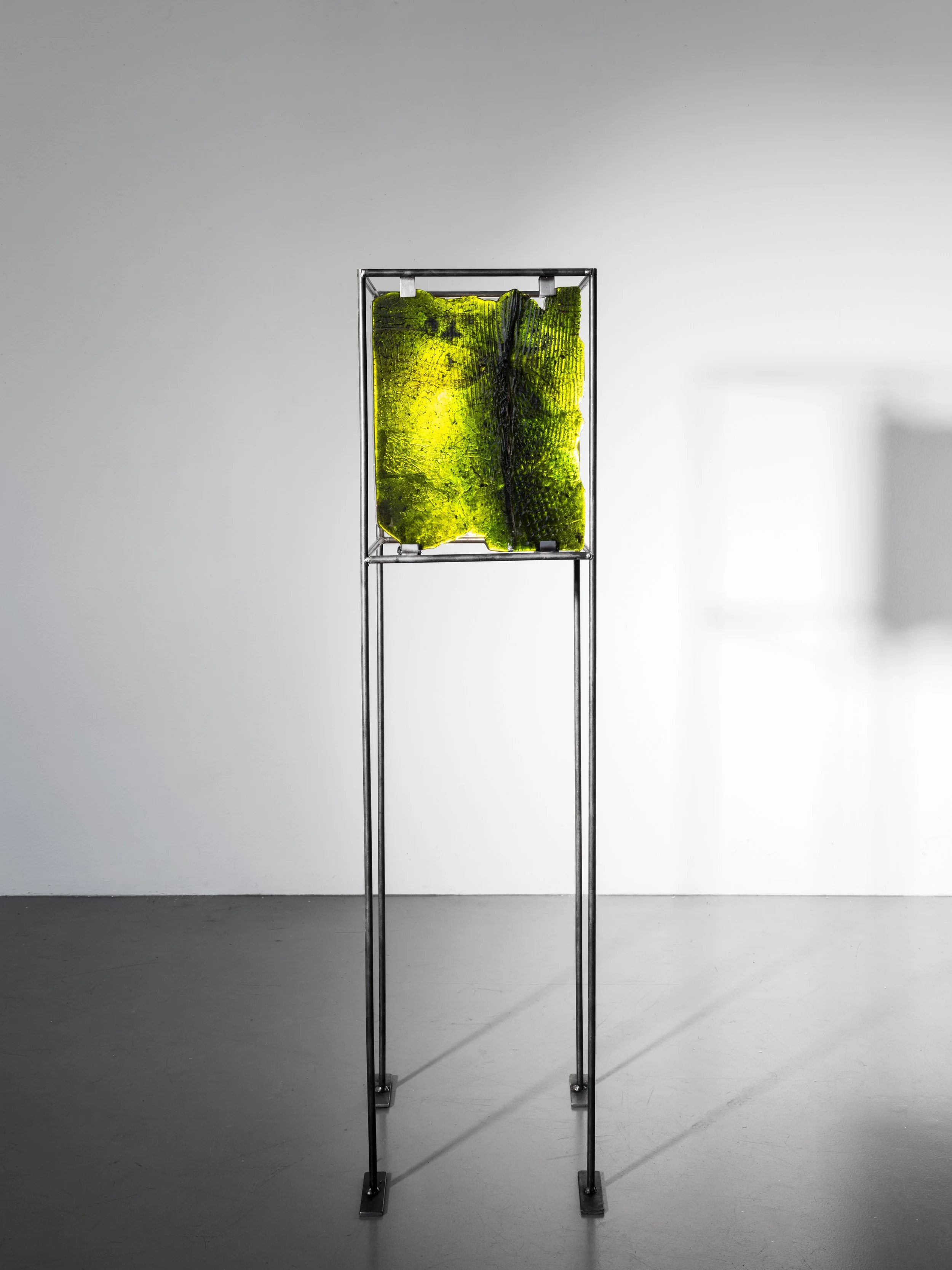
Traditional glass has reached a technological peak, transmitting up to 96% of incoming light while concealing all traces of its making. Its near invisibility allows us to observe nature from a position of distance and control. Windows frame landscapes for contemplation while separating the body from the outside. Glass thus both contains and exhibits, reflecting broader cultural tendencies toward individualism, seclusion, and self-display.
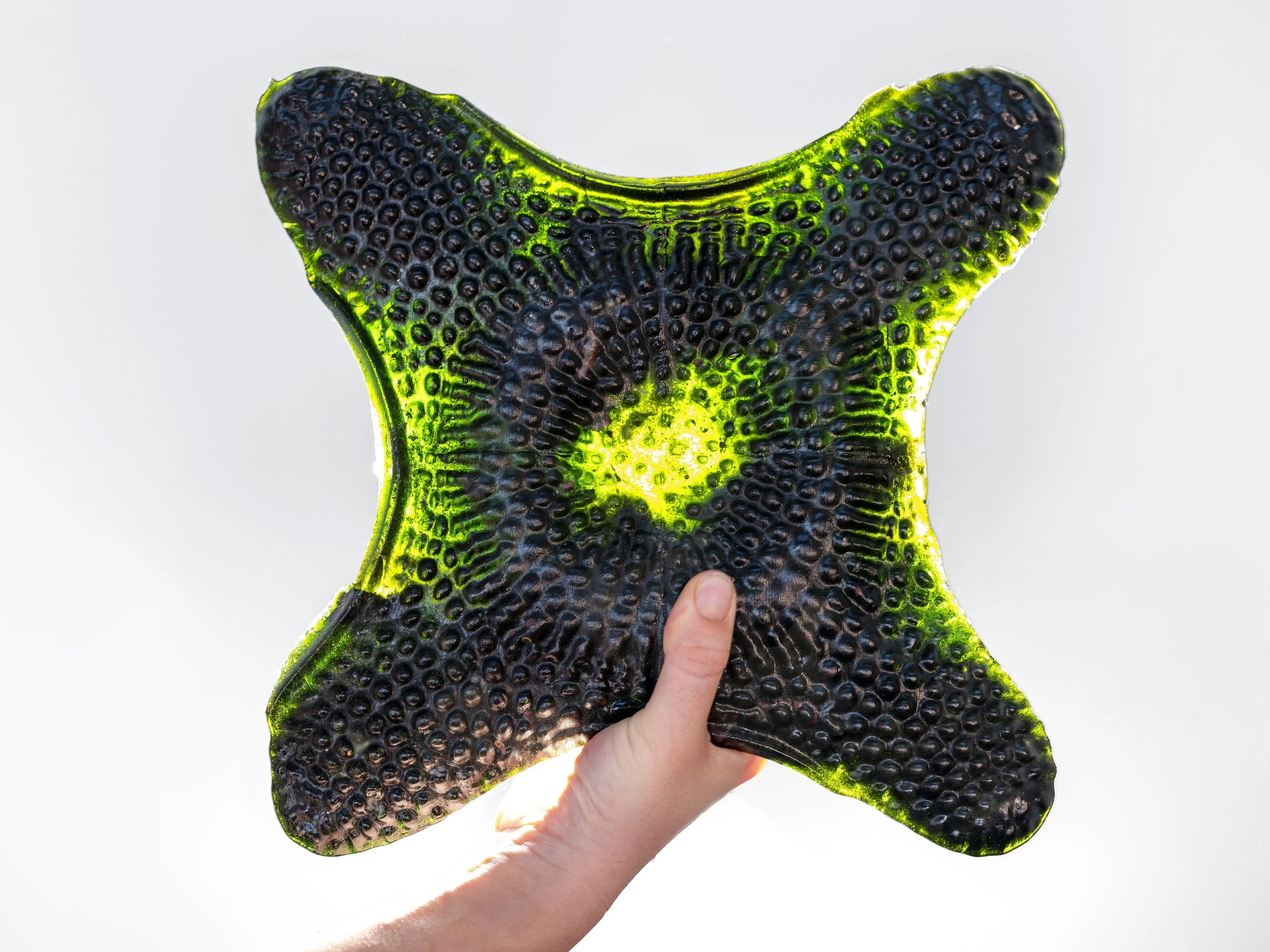
This glass breaks with the convention of invisible transparency. Its textured surface makes light interact with the material rather than simply pass through it, echoing the nanostructures algae use to manipulate light. Generated through computational design, these patterns translate biological principles into a tangible material experience, revealing both light and the process of creation.
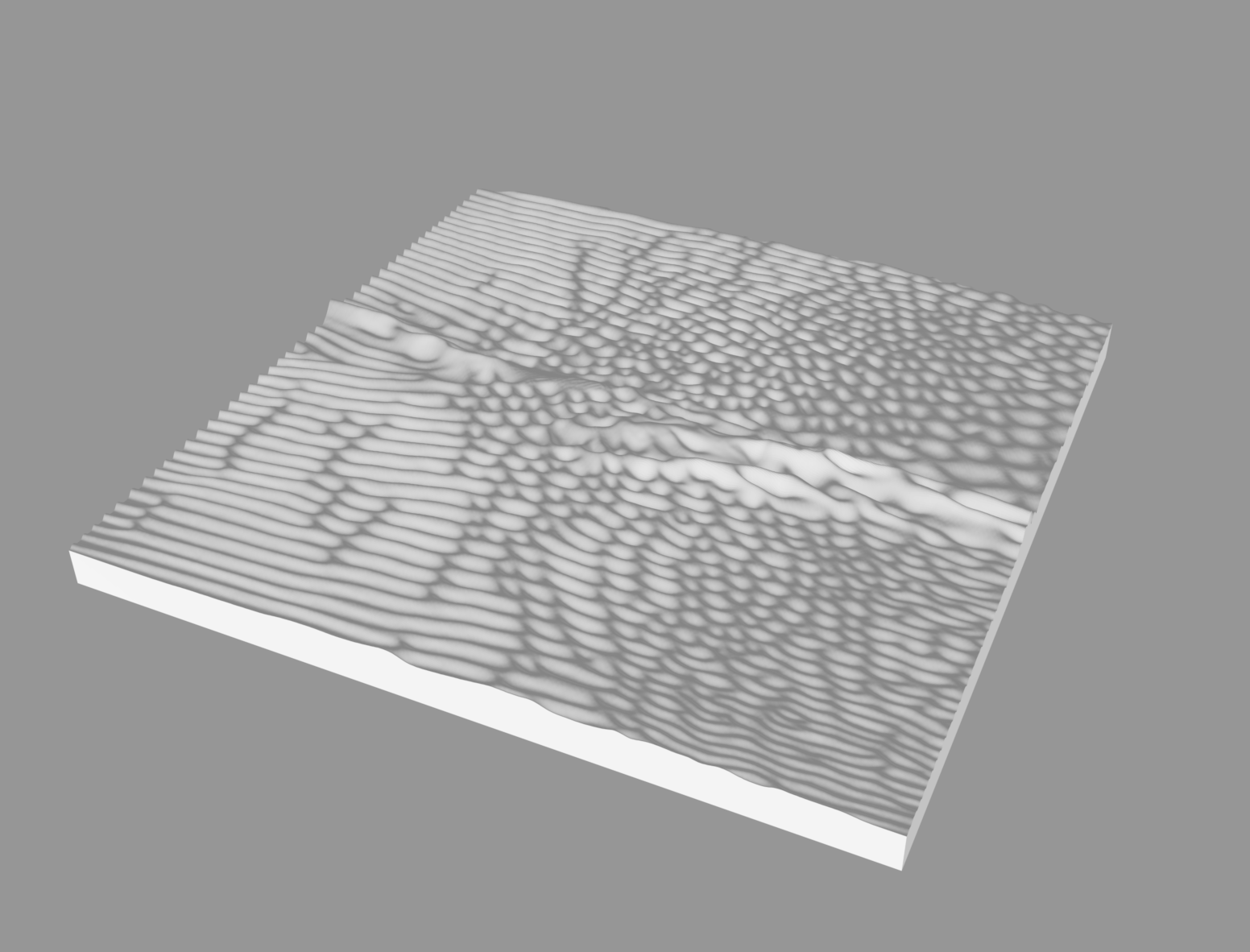
In doing so, the work proposes not only a new way of making glass but also a new sensorial relationship with it—one that acknowledges materiality instead of erasing it, and invites a more embodied awareness of how we inhabit, perceive, and relate to the natural world.